{"type":"check","format":[{"label":"month"},{"label":"day"},{"label":"year"},{"label":"hour"},{"label":"minute"}],"filetypes":[],"options":[{"label":"I want to learn how to change policy"},{"label":"I am a journalist"}],"title":"Focus","description":"Description of field","placeholder":"","helper":false,"abilities":["multiple"],"beacons":[],"preset":[],"identifier":175438885,"evaluate":[],"minimum":0,"maximum":200,"expression":"(.|\\n){1,}?","count":1}
Focus
Description of field
{"type":"check","format":[{"label":"month"},{"label":"day"},{"label":"year"},{"label":"hour"},{"label":"minute"}],"filetypes":[],"options":[{"label":"Washington DC area"},{"label":"New York City area"},{"label":"San Francisco Bay area"},{"label":"Los Angeles area"},{"label":"I'm in another location"}],"title":"Select your location","description":"Description of field","placeholder":"","helper":false,"abilities":[],"beacons":[],"preset":[],"identifier":321425908,"evaluate":[],"minimum":0,"maximum":200,"expression":"(.|\\n){1,}?","count":1}
Select your location
Description of field
By submitting this form, I agree that the Aspen Institute can collect, process, and retain limited personal information for administrative purposes; and that the Institute can share this limited personal information with its trusted service providers for program administration purposes. I consent to receiving email communications from the Aspen Policy Academy. I understand I can withdraw my consent at any time by contacting DataPrivacyLegal@aspeninstitute.org.
I agree to the Aspen Institute’s Terms of Use Agreement and acknowledge that I have read and understand the Aspen Institute Privacy Policy which provides additional information about how the Institute processes personal information, as well as rights I may have regarding the personal information the Institute maintains about me.
Thank you for signing up! Keep an eye on your inbox for our next weekly newsletter!
In our first full year as the Aspen Policy Academy, we ran more programs, taught more students, and saw more interest in our programming than ever before. Thousands of people registered for and participated in our free and paid trainings, learning critical policy skills that will enable them to have a positive impact on their communities. We also ran 46 training opportunities, helping students develop real policy solutions to some of the toughest tech and environmental challenges.
We’re proud to present a snapshot of the impact that our alumni had in 2025, and are excited to build on this impact in deeper, more effective ways in the coming year.
HOW WE MEASURE IMPACT
Policy: Alumni who have direct influence on policy
People: Alumni who have taken on policy roles
Media: Alumni and staff who lead meaningful conversations on policy
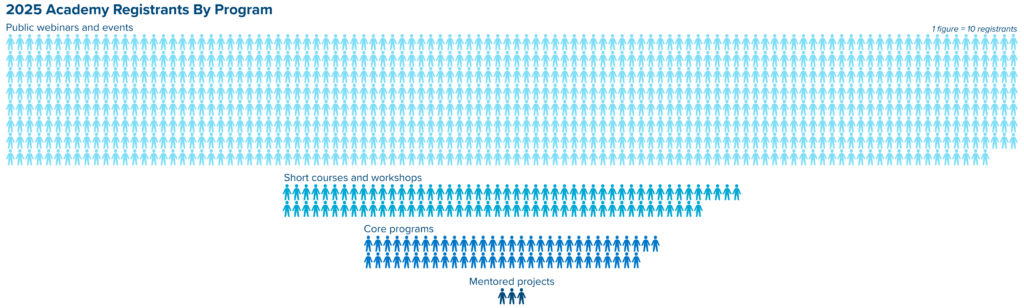
Throughout 2025, a record 10,500 people registered for our trainings, entering our programming “funnel,” from our free, public webinars to short courses and workshops, our core programs, and policy projects developed under Academy mentorship.
What sets our Academy trainings apart is that the skills we teach are immediately usable. Our students are already applying the lessons they’ve learned and, with effort and persistence, are having an impact across all branches of government, from the federal to the local level. Here are just a handful of examples from 2025.
Stories of Policy Impact
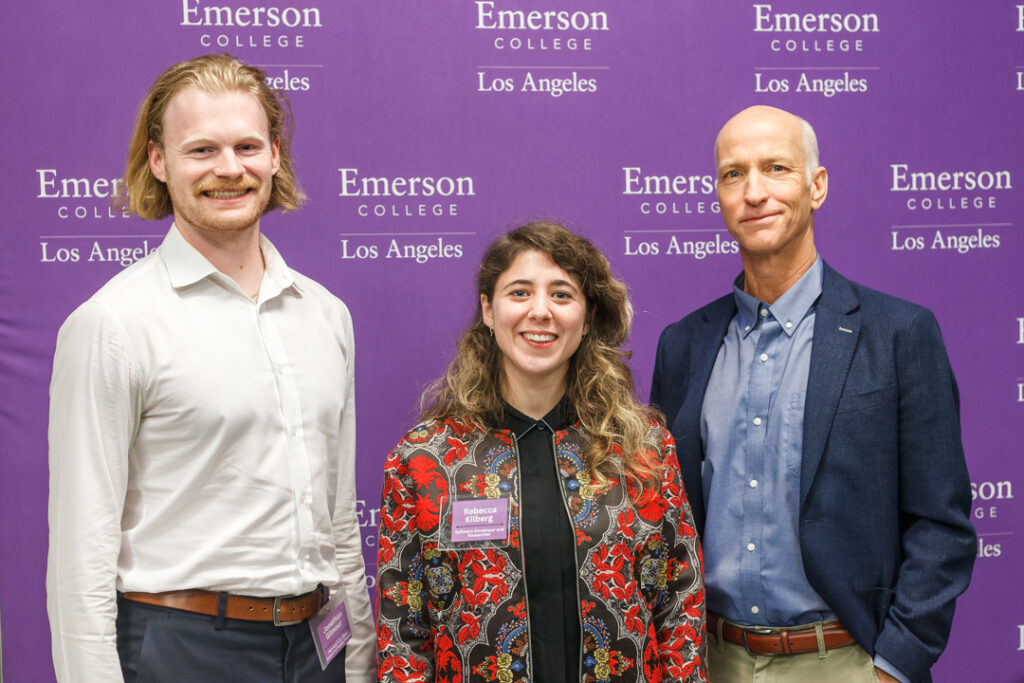
The State of Utah passed a bill that aims to compel data centers to report their water usage, adopting recommendations made by 2024 Science and Technology Policy Fellows Mary-Clare Bosco, Jonathan Gilmour, and Rebecca Kilberg in their Academy policy project.
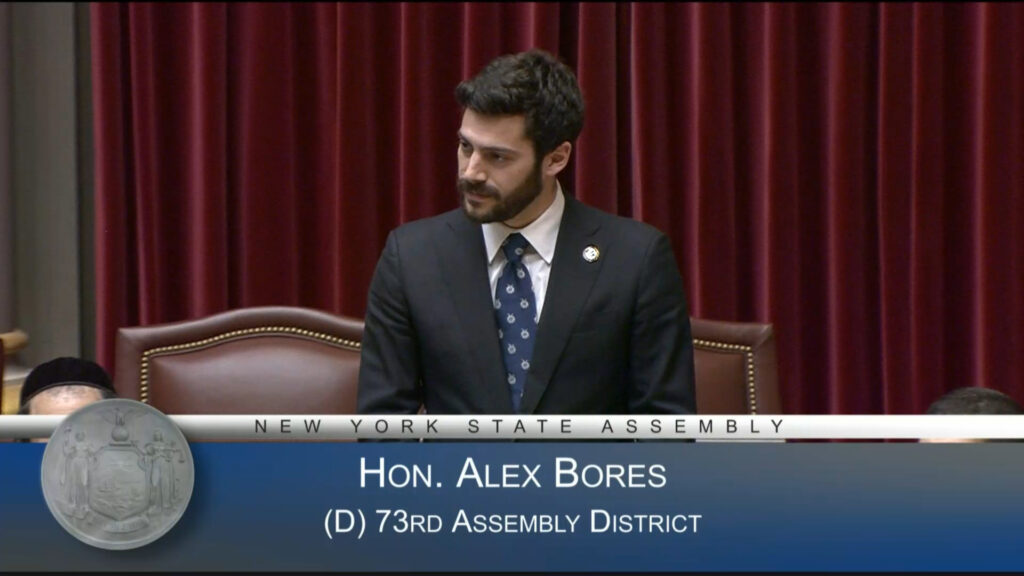
2021 Tech Executive Leadership Initiative (TELI) alum and current New York Assemblymember Alex Bores played a key role in introducing several tech policy bills, including safeguards against AI deepfakes, which passed in 2025.
2024 TELI graduates Sumant Dhall, Luis Gomez, George Mathew, Heather Morelli, and Raquel Romano convinced Georgia’s Commission on Equal Opportunity (GCEO) of the importance of improving its Fair Housing Division’s intake and investigations capacity. Since meeting with the TELI team, the GCEO has adopted many of the team’s ideas to improve the efficiency of its software and reduce the burden on citizens sending documents to the Commission.
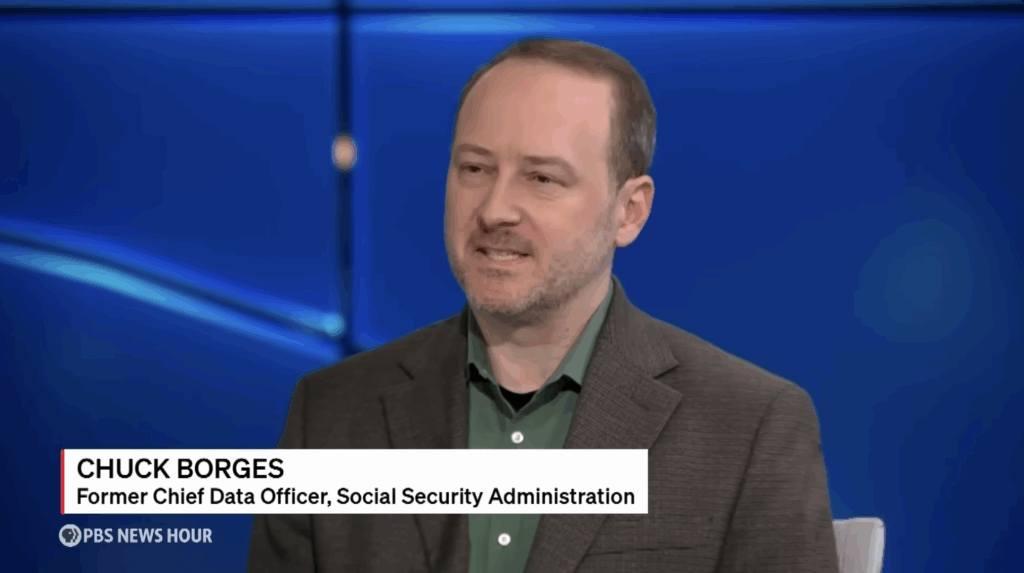
A whistleblower submission from 2020 TELI graduate and former chief data officer at the Social Security Administration Chuck Borges uncovered key issues with the agency’s handling of Americans’ sensitive data. The District of Maryland court case has the potential to set key precedent for how agencies manage federal data and use cloud services.
At left: Chuck Borges appears on PBS NewsHour in 2026. Watch the segment.
The Utah Office of Artificial Intelligence Policy (OAIP) adopted AI evaluation recommendations developed by 2024 Science and Technology Policy Fellows Jordan Loewen-Colón, Ayodele Odubela, and Jeanette Jordan. Their policy project recommended that Utah establish a standardized evaluation framework for its AI partners in order to build public trust in AI innovation. The project also inspired Jordan and Ayodele to found the AI Alt Lab, a nonprofit to help governments and organizations evaluate and responsibly implement AI tools.
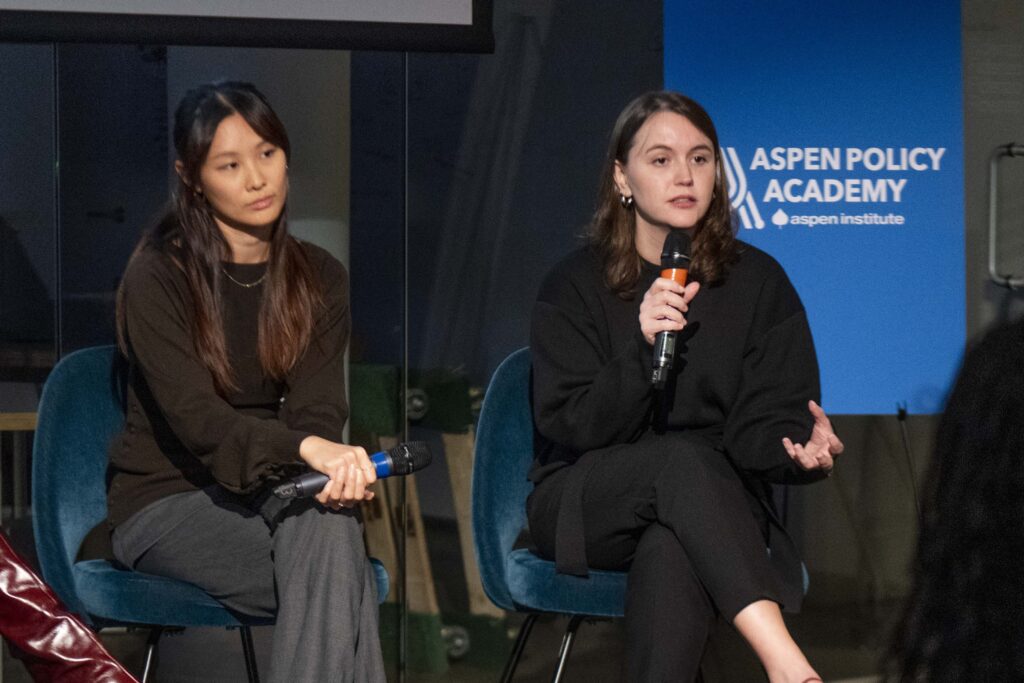
The New York City Office of Technology Innovation (OTI) incorporated policy recommendations from Academy fellows in its latest AI Action Plan. 2025 Science and Technology Policy Fellows Hande Güven and Jessica Wang suggested that OTI share more user-friendly guidance on how city agencies can responsibly implement generative AI. Their framework, which was largely adopted by the City, will unify city agencies’ protocols under NYC’s AI Principles, which were created by fellow Academy alum Neal Parikh.
“Keeping our planning and guidance current is one of our top priorities, which Academy fellows were critical in helping with this year.”
Alex Foard, assistant commissioner of NYC’s Office of Technology and Innovation
Alumni In Policy Roles
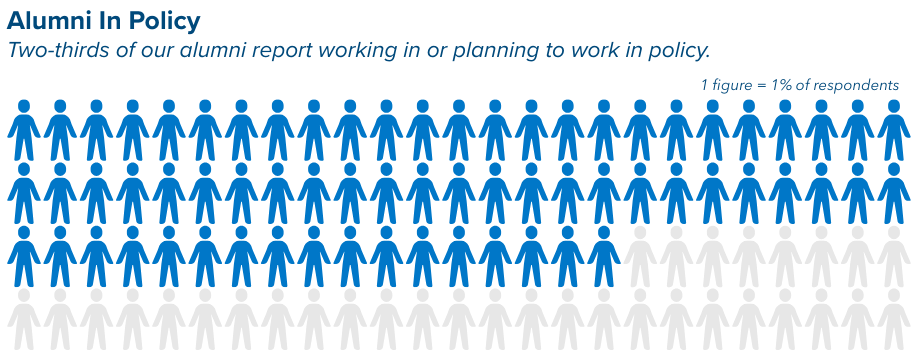
This year our alumni network grew to 845 technology, environment, and civic engagement experts—a more than 50% increase since 2024. More than two-thirds of alumni surveyed in December 2025 now report either working in a policy role or being interested in moving into a policy role.
Alumni who started new policy jobs in 2025 include:
Short courses alum who joined the US House Committee on Veterans’ Affairs as a professional staff member
“The Fellowship was a pivotal experience that helped me transition into a policy career.”
Matthew Zhou, California’s assistant chief data officer
Alumni and Staff In the Media
Academy staff and alumni were featured in the media more than 380 times in 2025, reaching an audience of more than 700,000 people. From sharing cybersecurity tips on podcasts to penning op-eds on AI safety, we brought key policy conversations into the spotlight. 2025 Science and Technology Policy Fellows even launched The Contours, a bi-monthly journal of tech policy essays and analyses. Here are highlights of some of our community’s best features of the year:
{"abilities":[],"action":"stack","className":"","columns":3,"controls":[],"exclude":[],"filters":[],"include":[{"include.postid":"28921","include.label":"Why Platforms Don\u2019t Catch Climate Misinformation \u2014 and How to Change That","include.classname":"article","include.meta":"article","label":"Why Platforms Don\u2019t Catch Climate Misinformation \u2014 and How to Change That"},{"include.postid":"28200","include.label":"Cloudflare Outage Exposes Reliance On a Handful of Internet Companies","include.classname":"article","include.meta":"article","label":"Cloudflare Outage Exposes Reliance On a Handful of Internet Companies"},{"include.postid":"28911","include.label":"I broke ChatGPT\u2019s new parental controls in minutes. Kids are still at risk.","include.classname":"article","include.meta":"article","label":"I broke ChatGPT\u2019s new parental controls in minutes. Kids are still at risk."},{"include.postid":"28271","include.label":"Think You\u2019ve Been Scammed? AI Is Making It Harder to Tell \u2013 Here\u2019s What to Do","include.classname":"article","include.meta":"article","label":"Think You\u2019ve Been Scammed? AI Is Making It Harder to Tell \u2013 Here\u2019s What to Do"},{"include.postid":"28292","include.label":"Organizaci\u00f3n Ofrece Cursos Gratuitos Para Batallar Contra el Cambio Clim\u00e1tico","include.classname":"article","include.meta":"article","label":"Organizaci\u00f3n Ofrece Cursos Gratuitos Para Batallar Contra el Cambio Clim\u00e1tico"},{"include.postid":"28918","include.label":"Former S.F. Mayor London Breed reveals her post-City Hall career plans","include.classname":"article","include.meta":"article","label":"Former S.F. Mayor London Breed reveals her post-City Hall career plans"}],"maximum":7,"meta":[],"property":"standard","searching":"","sorts":[],"sorting":[],"orders":["date","title","menu_order","post_type","post__in","relevance"],"filtering":"","refiner":false,"total":6}
“[The academy’s civic innovation] program is about more than learning how government works — it’s about inspiring a new era of civic leadership. … it’s a chance to continue to be a mentor.”
London Breed, Academy Civic Innovation advisor and former mayor of San Francisco
2026 and Beyond
The Academy’s core belief is that policy changes should reflect the will of the residents and constituents most affected by them. In what promises to be a year of continued policy change at all levels of government, we will continue to expand our civic engagement programming in 2026 to help everyone get involved in policy.
Alongside this work, we will continue training subject-matter experts to engage effectively in policy change. We will run our flagship Science and Technology Policy Fellowship and launch the 6th cohort of our Tech Executive Leadership Initiative, in partnership with Tech Talent Project, which this year will focus on preparing senior technology leaders for state-level roles in Medicaid delivery.
We are also exploring an opportunity to capture people at the moment they have a “civic spark,” an idea about something in their community that they want to change.
We’re looking forward to this growth, and to ultimately building an America where everyone has the power to impact policy.